

- Home
-
Electrical equipment
-
Sockets and switches
- Bticino
- Legrand
- Hager
- Schneider Electric
- Jung
-
Modelec
-
Collection Confidence
-
Confidence screw collection
- Narrow Confidence facades
- Narrow Confidence facades screw
- Long, narrow Confidence facades
- Long, narrow Confidence facades screw
- Long, narrow Confidence facades with reading light
- Long, narrow Confidence facades with spot light
- Simple mechanisms for faceplate Confidence
- Reinforced mechanisms for faceplate Confidence
- Reinforced mechanisms for narrow Confidence facades
- Reinforced mechanisms for long, narrow Confidence facades
-
Collection Desir
-
Collection Fascination
-
Collection Hitera
-
Iris Collection
-
Collection Karo
-
Collection M
- Narrow mechanisms
-
Collection Confidence
- Vandal-proof equipment
- Iboco fittings
-
Lighting
-
Interior lighting
-
Wall lights
-
LED strip
-
Downlights
-
Recessed spotlights
-
Surface-mounted spotlights
- Lamps
- Rod-mounted spotlights
- LED panels
-
Suspensions
-
Ceiling lights
-
Track and spotlights track lighting
- Tensioned cable
- Waterproof lighting
- Connected lamps
- Portholes
- Bathroom rulers
- Table lamps
- Panel lighting
- Headboard reading lights
- Light mirror
-
Wall lights
- Outdoor luminaires
- LED bulbs and spotlights
- Special lamps
- Lighting accessories
-
Interior lighting
-
Home security
-
Heating and sanitary
- Heating
-
Individual ventilation
-
Self-adjusting CMV
-
Humidity-sensitive CMV
- Insufflation ventilation
- Double-flow ventilation
- Wall-mounted aerator
- Duct puller
- Ventilation accessories
- Extractors and blowers
- Ventilation grilles
- Flow control
- Roof outlet
- Ventilation box
-
Ventilation duct
- Ventilation sleeve and reducer
- Sound trap
- Ventilation filters
-
Self-adjusting CMV
- Central vacuum
-
Connected home
- Ideas & Advice
Menu
-
MenuBack
-
Products
-
-
-
Electrical panel
- Bridging bars, combs
-
Electrical protection
- Differential block
- Earth leakage circuit breakers
- Earth leakage switches
- Fuses and fuseholders
- Grounding
- Lightning arresters and surge protectors
- Main circuit breaker
-
Modular circuit breakers
- 10A circuit breakers
- 16A circuit breakers
- 20A circuit breakers
- 32A circuit breakers
- ABB circuit breakers
- Circuit breakers Schneider Electric
- D-curve circuit breakers
- Eaton circuit breakers
- Four-pole circuit breakers
- Hager circuit breakers
- Legrand circuit breakers
- Siemens circuit breakers
- Three-phase circuit breakers
- Molded case circuit breaker
- Energy management
- Modular equipment
- Other modular devices
-
-
-
-
-
Interior lighting
- Bathroom rulers
- Ceiling lights
- Connected lamps
- Downlights
- Headboard reading lights
-
Interior lighting
- Bathroom rulers
- Ceiling lights
- Connected lamps
- Downlights
- Headboard reading lights
- Lamps
- LED panels
- LED strip
- Light mirror
- Panel lighting
- Portholes
-
Recessed spotlights
- Aric
- Arkoslight
- Europole
- Faro Barcelona
- Indigo Lighting - Collingwood
- Ledvance
- Paulmann
- Philips
- SG Lighting
- SLV
- Switch Lite
- Rod-mounted spotlights
- Surface-mounted spotlights
- Suspensions
- Table lamps
- Tensioned cable
- Track and spotlights track lighting
- Wall lights
- Waterproof lighting
- Lamps
- LED panels
- LED strip
- Light mirror
- Panel lighting
- Portholes
-
Recessed spotlights
- Aric
- Arkoslight
- Europole
- Faro Barcelona
- Indigo Lighting - Collingwood
- Ledvance
- Paulmann
- Philips
- SG Lighting
- SLV
- Switch Lite
- Rod-mounted spotlights
- Surface-mounted spotlights
- Suspensions
- Table lamps
- Tensioned cable
- Track and spotlights track lighting
- Wall lights
- Waterproof lighting
-
-
-
Outdoor lighting
- Exterior wall lights
- Bollards and lampposts
- Outdoor recessed
- Mobile luminaires
- Projectors
- Outdoor suspensions
- Outdoor ceiling lights
- Spotlights sign
- Solar luminaires
-
Lights and garlands
- Comet garlands
- Stalactite garlands
- Connectable festoons
- Spotlights and patterns
- Classic garlands
- Curtain lights
- Motifs
- Illuminated fir trees
- Luminous balls and animals
- Guinguette garland
- Garlands Bulbs B22
- Garlands Bulbs E27
- Garlands E14 bulbs
- LED connection cable
- Professional decorations
- Garland accessories
- Outdoor illuminated furniture
- Submersible luminaires
-
-
-
-
-
All you need to know about NF C 15-100
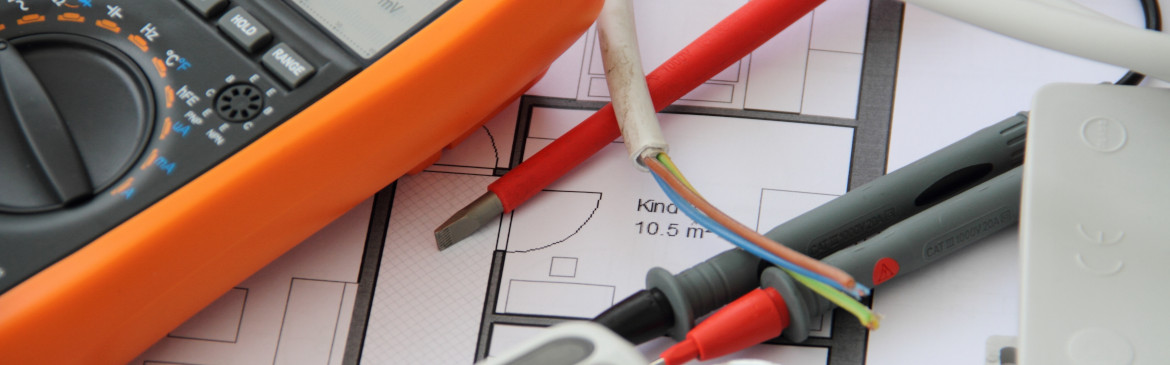
Standard NF C 15-100 is the reference text governing all low-voltage electrical installations in France. Whether you're building a new house, renovating an apartment or simply looking to bring your installation up to standard, understanding this document is essential. This comprehensive guide explains the essentials: what the standard is, what it requires, who it concerns and how to comply with it.
Contents
- What is the NF C 15-100 standard?
- The main principles of standard NF C 15-100
- Protecting people first and foremost
- The concept of specialized circuits
- Minimum number of sockets and light points
- Safety zones in the bathroom
- Earthing and the electrical panel
- Grounding
- The composition of the electrical panel
- Special features for the kitchen
- Verification and compliance: the role of Consuel
- Recent developments: home automation, EVs and renewable energies
- Conclusion
What is the NF C 15-100 standard?
NF C 15-100 is a French technical standard published by UTE (Union Technique de l'Électricité), the national electrical standards body affiliated to AFNOR (Association Française de Normalisation). For foreign readers, AFNOR plays a role in France equivalent to that of BSI in the UK, DIN in Germany or ABNT in Brazil: it is the official guarantor of national technical standards.
This standard defines the rules for the design, construction and testing of low-voltage electrical installations (less than 1,000 V AC) in residential buildings. It covers single-family homes as well as apartments, the common areas of apartment buildings and business premises attached to a dwelling.
Its last major revision dates back to 2002, with regular updates (notably in 2010 and 2015) to incorporate technological developments such as home automation, renewable energies and electric vehicle charging stations.
Why is this standard important? It is made compulsory by several mechanisms:
- Consuel (Comité National pour la Sécurité des Usagers de l'Électricité), the body responsible in France for certifying the conformity of new installations before the electric meter is commissioned, requires compliance;
- Home insurers use it to assess liability in the event of an electrical claim;
- real estate diagnostics (DPE, electrical diagnostics) check the main points when selling.
The main principles of standard NF C 15-100
Protecting people first and foremost
The first objective of the standard is to protect occupants against the risks of electrocution and fire caused by electrical sources. To achieve this, it imposes a hierarchy of protections:
- The main switchboard (or distribution board) contains all the switching and protection devices. It must be easily accessible, installed in a dry place and out of the reach of young children.
- Differential circuit breakers (also called differential switches in France) cut the circuit in the event of current leakage to earth, protecting people against electric shocks. The standard requires 30 mA differentials in damp rooms and for most domestic circuits.
- Protective circuit breakers protect each circuit against overloads and short circuits.
The concept of specialized circuits
The standard distinguishes between circuits according to their use. Each energy-consuming or high-risk appliance must have its own dedicated circuit, sized in terms of cable cross-section and circuit-breaker rating. These are the specialized circuits required in a dwelling:
- Cooker or hob: 6 mm² circuit, 32 A circuit breaker
- Washing machine: 2.5 mm² circuit, 20 A circuit breaker
- Dishwasher: 2.5 mm² circuit, 20 A circuit breaker
- Electric water heater: 2.5 mm² circuit, 20 A circuit breaker
- Freezer: 1.5 mm² circuit, 16 A circuit breaker (recommended)
- Integrated oven: 2.5 or 6 mm² circuit, depending on power rating
This organization avoids the risk of overloading and facilitates maintenance.
Minimum number of sockets and light points
The standard sets a minimum number of socket outlets and lighting points per room, depending on surface area:
| Piece | Minimum sockets (non-specialized) |
|---|---|
| 3 | <1|
Safety zones in the bathroom
The bathroom is given special treatment in the NF C 15-100 standard, as it is the room where the electrical risk is highest due to the simultaneous presence of water and electricity. The standard defines four protection volumes:
- Volume 0: the inside of the shower tray or bathtub. No electrical equipment is allowed.
- Volume 1: above the shower tray, up to 2.25 m high. Only very low-voltage (12 V) equipment and devices specifically designed for this volume (IPX5 minimum) are permitted.
- Volume 2: 0.60 m zone around volume 1. Devices must be Class II (double-insulated) and have a minimum IPX4 rating. Shaver sockets powered by isolating transformers are permitted.
- Volume 3 (deleted in 2015 revision): formerly the area between 0.60 m and 2.40 m beyond volume 2.
Outside the building, standard electrical outlets are permitted, provided they are fitted with a protective shutter.
Earthing and the electrical panel
Grounding
Every dwelling must have an earth connection to all metal grounds (lights, appliances, metal pipes) and to the protective conductor (green/yellow wire) of each circuit. The resistance of the earth connection must be less than 100 O, and ideally less than 50 O, to ensure proper operation of the differential devices.
The composition of the electrical panel
According to the standard, the table must include :
- A connection circuit breaker (or head circuit breaker) which forms the boundary between the electricity supplier's network and the private installation;
- One or more 30 mA differential switches (AC type for common uses, A type for circuits containing electronic equipment such as chargers, inverters and UPS);
- Divisional circuit breakers protecting each circuit;
- A lightning arrester mandatory in areas with high lightning exposure (classified in France according to an official map of keraunic levels).
The standard also recommends a communication board (grade 1 to 3 depending on requirements) to group together computer, TV and telephony network equipment, in accordance with NF C 15-100-11 dedicated to residential communication networks.
Special features for the kitchen
The kitchen is the room with the most specialized circuits. In addition to the devices already mentioned, the standard requires :
- at least 4 double socket outlets for small appliances, above the worktop
- an independent lighting circuit
- a ground connection on all metal equipment (sink, hood, etc.).)
- 30 mA differential protection for all circuits.
For kitchens equipped with an induction hob, we recommend using a 6 mm² cable, even if the appliance's power rating is less than 7,200 W, to anticipate the possibility of replacing it with a more powerful model.
Verification and compliance: the role of Consuel
In France, all new or completely renovated electrical installations must be checked by the Consuel before being put into service. Consuel is a non-profit organization mandated by the public authorities to carry out this mission. It issues a attestation of conformity (often called a "Consuel visa"), without which the network operator (Enedis, formerly ERDF) cannot commission the meter.
For foreign readers, this system has no universal equivalent. In the UK, it's Part P of the Building Regulations that plays a similar role; in Belgium, it's the RGIE (Règlement Général sur les Installations Électriques); in Quebec, it's the Construction Code and Hydro-Québec that verify compliance.
The Consuel verification procedure includes :
1. Installation by a qualified electrician or by a private individual on request
2. Submission of a declaration of work accompanied by a plan of the installation
3. An on-site inspection visit if justified by a draw or doubt
4. Issuance of the green certificate (new housing) or blue certificate (renovation)
Recent developments: home automation, EVs and renewable energies
The NF C 15-100 standard has evolved to incorporate the new realities of connected buildings and the energy transition:
- Charging stations for electric vehicles (IRVE): since 2020, all new housing or major renovations must include the pre-positioning of a dedicated circuit for a charging station, in accordance with the LOM law (Mobility Orientation Law). The terminal itself must be installed in accordance with NF C 15-100 and certified by a qualified IRVE installer.
- Photovoltaic generation: inverters and grid connection devices must comply with specific protection rules integrated into the annexes to the standard.
- Home automation and energy management systems: the standard provides for dedicated spaces in the electrical panel for control modules (load shedding, off-peak management, etc.).).
Conclusion
The NF C 15-100 standard is much more than an administrative constraint: it's an everyday safety tool. It guarantees that your electrical installation is sized to meet your needs, protected against the risks of fire and electrocution, and ready to accommodate tomorrow's equipment. Whether you're hiring a professional electrician or doing the work yourself, knowing the basics will help you make the right decisions and demand the right materials.
For major work, don't hesitate to consult a certified professional and check that the materials used (circuit breakers, cables, panels, sockets) comply with current standards and bear the CE and NF markings.
Our team of writers has been selected to provide you with quality articles to help you realize your projects. All information is systematically checked and referenced, so you can be sure of our editorial quality.
Frequently asked questions
The domeashop store offers you a list of questions and answers corresponding to the most frequently asked questions related to the theme and products discussed in this article. If you can't find the answer you're looking for, contact us and our specialists will be happy to help.
It is not a law in the strict sense of the term, but it is made compulsory in practice by Consuel, insurance and property diagnostics. All new or renovated installations must comply with these regulations in order to obtain electricity meter service.
A circuit breaker protects a circuit against overloads and short circuits. A ground fault circuit interrupter (GFCI) detects current leaks to earth and breaks the circuit to protect people from electrocution. The two devices are complementary and both are mandatory in a NF C 15-100 compliant panel.
Yes, an individual can build his or her own electrical system for personal use. He must then have Consuel verify compliance before commissioning. On the other hand, for work in commercial or public buildings, the services of a qualified electrician are generally mandatory.
The cost varies according to the extent of the work. A simple electrical panel upgrade in an apartment can cost between €800 and €1,500. A complete electrical upgrade for a 100 m² house can cost between €5,000 and €8,000. Financial aid such as MaPrimeRénov' (French government aid for energy renovation) can partially cover certain related work.
Consuel (Comité National pour la Sécurité des Usagers de l'Électricité) is the French organization responsible for verifying the conformity of electrical installations before they are put into service. To obtain the certificate, you need to fill in a declaration of work form available on the Consuel website, pay the application fee, and wait for a possible inspection visit.
Yes, the standard also applies to outdoor installations (garden lighting, outdoor sockets, motorized gates, swimming pools, etc.).). These installations are subject to additional requirements in terms of IP protection against moisture and weather.
The cable cross-section depends on the power of the circuit: 1.5 mm² for lighting (10 A), 2.5 mm² for sockets (16 A) and standard appliances, 4 mm² for electric convectors (25 A), and 6 mm² for hobs and large appliances (32 A). Standard NF C 15-100 precisely defines these values for each type of circuit.
A lightning arrester is a device that protects the electrical installation and connected devices against surges caused by lightning or mains switching. It is mandatory in areas classified as high lightning risk according to the official French keraunic map, and strongly recommended in all new homes to protect sensitive electronic equipment.
The electrical diagnosis is a report on the interior electrical installation carried out by a certified diagnostician. It is compulsory in France for the sale of a home whose installation is more than 15 years old. It assesses compliance with the NF C 15-100 standard and points out any anomalies, but does not impose any immediate work on the vendor.
Yes, the standard is periodically updated to incorporate new technologies (home automation, charging stations, photovoltaics) and feedback from electrical accidents. It is therefore important to refer to the version in force at the time of the work, and to consult a professional who is up to date with the latest regulatory developments.
These articles may be of interest to you
Did you like this article? Would you like to find out more about this theme or product range? The domeashop store suggests you also consult the following articles to find out more and get all the advice and information you need to make your projects a success.