
- There are no more items in your cart
- Shipping
- Total €0.00
Regulations governing home surveillance cameras

It is essential to understand the regulations governing home surveillance cameras before installing any such system. This guide outlines the areas that may be filmed, obligations toward third parties, and rules for retaining footage, to help you secure your home in compliance with the law. DomeaShop presentsRegulations governing home surveillance cameras applicable to marketed products, to ensure that each project results in a compliant solution.
Contents
- The law on home surveillance cameras
- The principle of privacy
- Video surveillance and video security: a distinction
- Permitted areas for each surveillance camera
- Private areas that can be filmed
- Neighbors and public roads excluded
- Informing individuals being filmed by a surveillance camera
- Is it mandatory to display a camera?
- Access to and security of video footage
- Privacy and restricted areas
- Places you should never film
- Employees and home care providers
- Install a camera and manage the images
- Retention period and access
- Possible remedies and sanctions
- Choosing the right equipment
The law on home surveillance cameras
In France, it is legal to install a surveillance camera in your home, provided you follow specific guidelines. Law no. 78-17 of january 6, 1978, as amended by law no. 2018-493 of june 20, 2018, on the protection of personal data, constitutes the legal framework of reference. No prior notification is required when the system is limited strictly to the private sphere. The CNIL assists individuals in complying with these rules.
The principle of privacy
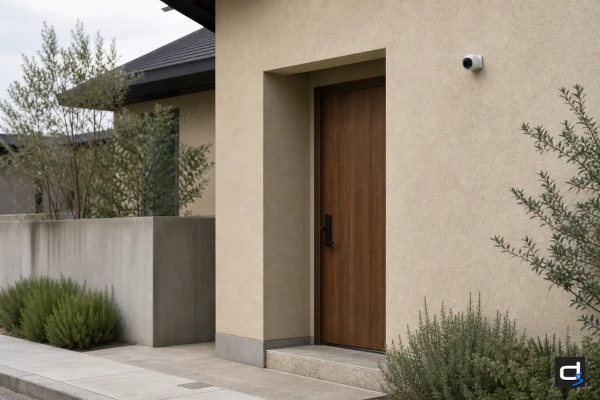
The regulations governing home surveillance cameras are based on a simple principle: video footage must be limited to the spaces you personally occupy. If the lens extends into an area belonging to a third party—such as a sidewalk, a neighbor’s yard, or a common area—data protection laws apply. Proportionality is also required: the camera must address a genuine need for the safety of people and property.
- Private sphere: the interior of the residence, the yard, the patio, the garage, and the driveway belonging to the owner or occupant.
- No reporting required: no administrative formalities are required as long as the recording remains within the boundaries of private property.
- Proportionality: the number of cameras and their field of view must correspond to the actual security need, without excessive surveillance.
The CNIL has published practical recommendations for verifying an installation's compliance. Review them before installation: this will help you avoid costly corrections later on. In practice, pointing the camera toward the main entrance or the garage is usually enough to protect the vulnerable areas of a home without filming public roads or neighboring properties.
Once the legal framework has been established, orientation and angle of view become the primary technical criteria. A wide-angle lens covers a larger area, but increases the risk of unintentionally capturing an area outside the property. Check the camera's actual field of view before permanently mounting it by simulating its angle from the chosen mounting location.
Video surveillance and video security: a distinction
A distinction must be made between two systems: video surveillance applies to private premises that are not open to the public, while video protection applies to public spaces and areas accessible to everyone. The regulations governing a surveillance camera installed by a private individual therefore differ from those imposed on businesses or government agencies that wish to film public streets. They must obtain authorization from the prefect and comply with the internal security code, in particular articles L. 251-2, L. 251-3 et L. 252-3.
To learn about the obligations that apply beyond private property, the public service provides detailsRegulations governing surveillance cameras on public roads. A private individual is not allowed to film the street or a common area, even to keep an eye on a vehicle parked nearby. Depending on the level of protection you want, adjust the camera’s field of view to focus on your home without infringing on a neighbor’s privacy: the line between private and public space must remain clear.
Permitted areas for each surveillance camera
Determining the areas that a surveillance camera can cover is the first step in any installation. The difference lies in the focus of the lens: just a few degrees too much can turn a legal arrangement into a violation.
Private areas that can be filmed
Regulations governing outdoor surveillance cameras permit the recording of the main entrance, the garage, the patio, the yard, and the access paths belonging to the property. Adjust each camera so that its field of view ends precisely at the boundaries of the field. Mounting the camera at a height—under a roof overhang or at the top of a gatepost—provides a downward view and minimizes the risk of filming the audience.
Best suited for properties with multiple separate entrances: a model with an adjustable field of view, so you can adjust the lens without removing the mount. The IP cameras offered by DomeaShop range from 1080p Full HD to 8 MP, with an infrared night vision range of 20 m to 40 m, depending on the model. The IP65, IP66, and IP67 ratings ensure their weather resistance for extended outdoor use.
- Main entrance: the primary entry point for identifying anyone entering the home.
- Garage and gate: areas vulnerable to nighttime break-in attempts, where infrared vision provides better detection.
- Private terrace and garden: areas that may be monitored provided that the camera remains within the property boundaries.
Wireless cameras make installation easier when secondary access points are located far from the electrical panel. However, be sure to check the stability of the Wi-Fi signal at the intended location: an unstable connection may interrupt the recording. For a surveillance camera used continuously outdoors, PoE technology remains the most reliable solution, since a single network cable provides both power and data transmission.
Neighbors and public roads excluded
The regulations governing surveillance cameras in private homes prohibit filming a neighbor's property without their explicit consent. Such recording may infringe on individuals’ privacy and render the person responsible liable, particularly under article 9 of the civil Code.
- Sidewalk and street: private individuals are prohibited from filming public roads, even partially, including to monitor a vehicle parked in front of their home.
- Neighbor's yard: recording someone else's property without consent constitutes an invasion of privacy and is subject to penalties.
- Common areas: the lobby, hallways, elevator, and shared parking lot are managed collectively and may not be filmed by a single resident.
- Roads and public spaces: these areas are subject to video protection, which requires authorization from the prefect, and are not subject to private video surveillance.
Any deviation from the specified scope may result in civil and criminal liability for the installer. Before mounting the camera permanently, run a test sequence from the mounting location, then check each frame: neither the street, nor the neighbor's yard, nor any common areas should appear. This audit reduces the risk of litigation and penalties. Somehome video surveillance kits are available, along with the necessary materials and guides to ensure proper installation on the first try.
Informing individuals being filmed by a surveillance camera
Installing a camera does not exempt you from informing people who enter its field of view. This rule protects both the people being filmed and the owner of the device: a discreet camera without any warning signs could expose the home to a legal claim based on the right to privacy. Transparency is therefore just as much a part of a proper installation as the correct orientation of the lens.
Is it mandatory to display a camera?
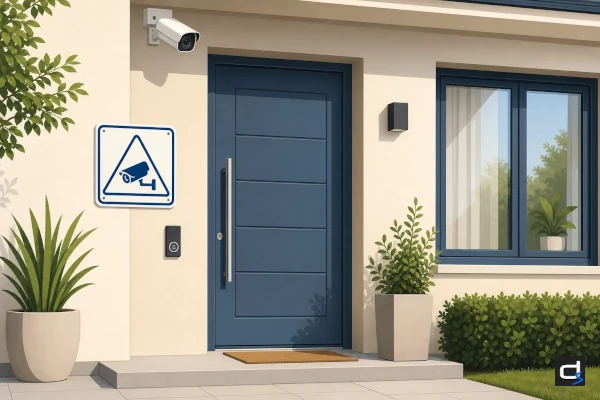
For a provision limited to the private family sphere, the law does not formally require any public notice. However, the CNIL recommends informing people outside the household as soon as they may be filmed. A sign visible at the entrance to the monitored area, indicating the presence of the camera and its security purpose, generally meets this requirement.
The situation changes when an employee works in a home—such as a home health aide, a babysitter, or a housekeeper. This information must therefore be included in the employment contract; otherwise, it will fall outside the strictly private sphere. Any person who is filmed may exercise their right to object if the recording infringes on their privacy. She may also request access to images involving her and, under certain conditions, their deletion.
Access to and security of video footage
Records management is an essential component of compliance. Store recordings locally, on an NVR or dedicated storage device, without syncing them with a consumer app. Never share the recordings on the Internet, social media, or with unauthorized individuals: such use may result in severe penalties. Secure storage—ideally encrypted—reduces the risk of unauthorized access.
- Restricted access: only members of the household may view the images; any access by a third party must be justified and limited in duration.
- Encrypted storage: store records on a secure medium, preferably one that is encrypted, to ensure data confidentiality.
- Prohibition on distribution: sharing images on the Internet or transmitting them without the consent of the individuals concerned is prohibited.
The IP cameras offered by DomeaShop are ONVIF-compatible, which makes it easy to integrate them with an NVR capable of encrypting data and managing user permissions. The RTSP and H. formats,264 and H.265 are listed in the product data sheets: Be sure to check compatibility with your recording system before installing the equipment. Depending on the property's layout, a centralized NVR provides more precise access control than remote cloud storage.
Privacy and restricted areas
Privacy protection also applies within the home. Before installing any surveillance camera, be aware of these limitations: a poorly positioned surveillance camera may result in civil or criminal liability for its owner.
Places you should never film
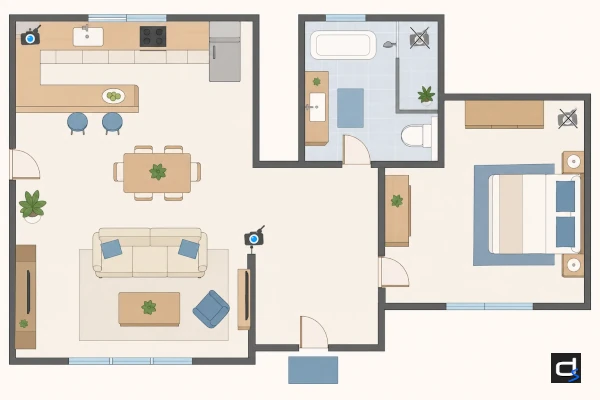
Certain areas of the home must remain completely out of view. Article 226-1 of the penal Code prohibits the recording of a person’s image in a private place without that person’s knowledge. Video recording in a private location is therefore prohibited, as is audio recording, which may constitute a separate offense.
- Bedrooms: even within the home, they are part of the strictly private sphere.
- Bathrooms and restrooms: everyone has a right to privacy in these areas.
- Hidden cameras: authorized devices must be visible and clearly marked.
- Audio recording: turn off the built-in microphone, if available.
These prohibitions also apply to the property owner. Respecting the privacy of every resident, visitor, or staff member is a legal obligation. In practice, check the camera angle and mute the audio before starting up the system.
Employees and home care providers
The presence of a live-in employee, a nanny, a care assistant, or a housekeeper means the system falls outside the family context if that person can be filmed while performing their job duties. The employer must inform the employee of the presence of the cameras and their purpose, both verbally and in writing in the employment contract. This requirement stems from the gdpr and labor law: data subjects must know what data is being collected and why.
Video surveillance cannot become a tool for constant monitoring. The camera must be used solely for the security of property and people, without filming the employee's usual workspaces. A camera angle directed toward the entrances and main access points generally offers a suitable compromise; DomeaShop offers models with adjustable angles, which allow you to precisely adjust the field of view.
The difference lies in the camera’s field of view: a camera pointed toward the interior of a home must not record the street or a neighboring private property. If the field extends onto the public right-of-way, reposition the lens or use a masking area. This helps protect privacy and keep data collection within authorized limits.
Install a camera and manage the images
A successful installation is not enough: the management of records also determines the system's compliance. Before putting a surveillance camera into service, check the retention period for the footage, access rights, and available remedies in the event of a dispute. These rules apply to both a home security system and a multi-camera kit covering a property.
Retention period and access
Images must be deleted as soon as their intended purpose has been fulfilled, and no later than one month thereafter. This time limit applies to most residential installations, except when legal proceedings require that relevant footage be preserved. An NVR configured to automatically overwrite the oldest files when storage is full allows you to comply with this rule without needing to take regular action.
- Maximum retention period: 30 days, unless there is an ongoing legal proceeding.
- Automatic deletion: configuring the NVR for cyclic overwrite ensures compliance with legal retention requirements without the need for manual management.
- Household access: household members can view the images, but this access must remain secure and must not be shared with third parties.
- Secure storage: opt for an encrypted local recorder or a certified cloud solution, and avoid any unprotected storage.
In a condominium, footage captured by cameras installed in common areas is accessible only to designated individuals, such as the property manager or a member of the homeowners' association board, and only after a confirmed incident. In practice, this stricter framework distinguishes between the collective use of video surveillance and that installed in a private residence.
| Location | Maximum shelf life | Authorized access |
| Private residence (family use) | 30 days | Household members |
| Ongoing legal proceedings | Duration of the procedure | Competent authorities |
| Common areas in a condominium | 30 days | Property manager / homeowners' association advisor |
| Home care worker caught on camera | 30 days | Restricted access; employee notified |
H. compatibility.265 of the IP cameras offered by DomeaShop reduce video file sizes while maintaining high resolution. Standard storage is therefore more readily sufficient to comply with the statutory retention period. Check to see if the NVR supports this codec: this information is listed in each product description.
Possible remedies and sanctions
Failure to comply with the rules governing private video surveillance may result in civil and criminal penalties. A camera pointed toward a public space or a neighbor’s property may result in a formal notice, a complaint filed with the CNIL, or a civil lawsuit seeking the removal of the device and damages.
The criminal penalty provided for in article 226-1 of the penal Code may include up to one year of imprisonment and a fine of €45,000, in addition to civil damages. The unauthorized distribution of a video on the Internet constitutes an aggravating circumstance.
Choosing the right equipment
To legally secure access to a home, IP cameras provide a suitable technical foundation: 1080p to 8 MP resolution, infrared night vision up to 40 m, motion detection, and ONVIF compatibility with most nvrs. Surveillance camera regulations require that the model be appropriate for the area to be covered and the desired identification distance. Depending on the home's layout, DomeaShop offers equipment from Hikvision, Bosch, Uniview, and Gigamedia, among others, with product descriptions detailing IP ratings, supported codecs, and actual field of view angles.
Whether you're setting up a new system or upgrading an existing one, DomeaShop's video surveillance kits include cameras, an NVR, and the cabling needed for a seamless setup. This solution minimizes compatibility issues, even for a non-professional installer, especially when multiple entry points need to be monitored simultaneously. The difference lies in image quality: Full HD resolution or higher makes it easier to identify faces and vehicles, especially when legal proceedings are underway.

Product categories
The domeashop store offers product categories related to this item to provide you with more information about the product(s) you are looking for. Don't hesitate to contact us for advice from our specialists.
Frequently asked questions
The domeashop store offers you a list of questions and answers corresponding to the most frequently asked questions related to the theme and products discussed in this article. If you can't find the answer you're looking for, contact us and our specialists will be happy to help.
For strictly personal use, the law does not require any signage. However, the CNIL recommends posting a visible sign at the entrance to any monitored area when people from outside the household are likely to enter it. If an employee performs work at a customer's home, this information must be specified in the employment contract. This signage helps protect the installer from legal action based on the right to privacy of the people being filmed.
Records must be deleted as soon as possible and, at the latest, within one month. Only an ongoing legal proceeding can justify retaining them beyond that period. In practice, configure the NVR to automatically overwrite the oldest files: this feature ensures that the limit is met without manual intervention. Images should never be posted on the Internet without the consent of the people in them.
No. For private individuals, filming public roads is strictly prohibited, even partially and even for the purpose of monitoring a vehicle parked in front of one’s home. This recording is considered video surveillance: it requires authorization from the prefectural authorities and is restricted to public authorities and business owners, subject to certain conditions. A camera that records the sidewalk or the street may subject its owner to a formal notice, a complaint filed with the CNIL, and a criminal penalty of up to a €45,000 fine.
A tenant may install a security camera, provided they follow the same rules as any other individual. Structural modifications, such as drilling holes or running concealed wiring for a wired camera, require the owner's prior approval. Wi-Fi models are a suitable alternative when they avoid the need for permanent modifications to the home. In a condominium, any installation in the common areas requires a decision made by the general meeting by a simple majority, as well as notification to residents via a posted notice.