
- There are no more items in your cart
- Shipping
- Total €0.00
Reduce your energy consumption with intelligent ventilation.

Faced with ever-rising energy prices and growing environmental concerns, optimizing the energy consumption of our homes has become an absolute priority. Among the innovative solutions that are emerging, intelligent ventilation is a particularly effective lever for savings, capable of reducing your heating and air-conditioning energy costs by up to 40%. In this article, we take an in-depth look at how this technology can transform your daily life, while protecting your budget and the planet.
Contents
- What is intelligent ventilation?
- The link between ventilation and energy consumption
- How does an intelligent ventilation system work?
- Intelligent sensors
- The central control unit
- Connectivity and remote control
- Heat recovery
- Concrete energy savings
- Intelligent ventilation and indoor air quality
- The different types of systems available
- Intelligent dual-flow CMV
- Connected humidity-sensitive single-flow CMV
- Decentralized intelligent extractors
- Hybrid systems with free-cooling
- Installation and integration into your home
- Preliminary study
- Equipment positioning
- Aesthetic integration
- Commissioning and parameterization
- Maintenance and durability
- Regular maintenance
- Preventive maintenance
- Durability and scalability
- Financial aid and return on investment
- MaPrimeRénov'
- Energy Savings Certificates (CEE)
- Reduced VAT and eco-PTZ
- Calculating return on investment
- Conclusion
What is intelligent ventilation?
Intelligent ventilation represents a major advance on traditional ventilation systems. Unlike conventional VMC (Ventilation Mécanique Contrôlée) systems, which operate at a constant flow rate, an intelligent ventilation system automatically adapts its operation to the actual needs of your home.These systems incorporate advanced sensors that measure indoor air quality in real time, including CO2 levels, humidity, volatile organic compounds (VOCs), and sometimes even fine particles. Using this data, the system continuously adjusts the ventilation rate to maintain healthy air while minimizing energy losses.The fundamental difference lies in this ability to adapt. Whereas a traditional CMV evacuates heated or cooled air continuously, even when no one is in the house, an intelligent system automatically reduces its power when you're away or at night, avoiding considerable energy wastage.The link between ventilation and energy consumption
To understand the energy impact of ventilation, you first need to grasp a simple principle: every cubic metre of air you evacuate from your home takes with it the calories you expended to heat it in winter, or the coolness you produced to cool it in summer.In a traditional house fitted with single-flow CMV, ventilation losses account for between 20% and 30% of total heat loss. This means that around a quarter of your heating bill literally goes out the extract units. In a well-insulated house, this proportion can rise to as much as 40%, as ventilation becomes the main source of heat loss.The situation worsens when the ventilation system operates at maximum flow all the time, without taking real needs into account. This is typically the case in many homes where occupants manually set their VMC to maximum speed and forget about it in this position. The result: air that is certainly well renewed, but at the cost of excessive energy consumption.How does an intelligent ventilation system work?
An intelligent ventilation system is built around several technological components that work in synergy to optimize air quality and energy savings.Intelligent sensors
At the heart of the system are sophisticated sensors strategically positioned in different rooms of your home. CO2 sensors detect human presence and activity: the more people in a room, the higher the CO2 level. Humidity sensors identify sources of water vapour, particularly important in bathrooms and kitchens. VOC sensors identify pollutants emitted by materials, household products or cooking activities. Some top-of-the-range systems also incorporate PM2.5 and PM10 fine particle sensors.The central control unit
The real brain of the system, the control unit collects and analyzes all sensor data in real time. It uses advanced algorithms to determine the optimum ventilation rate for each zone of the home. This on-board artificial intelligence gradually learns your lifestyle habits and anticipates your needs. For example, if you routinely shower at 7 a.m., the system will automatically increase the ventilation rate in the bathroom a few minutes before that time.Connectivity and remote control
Most modern systems incorporate WiFi or Zigbee connectivity, enabling control via smartphone or tablet. You can monitor air quality in real time, consult consumption history, modify settings or manually force intensive ventilation if necessary. This connectivity also enables integration with other home automation equipment such as smart thermostats, creating a coherent energy ecosystem.Heat recovery
The most efficient systems incorporate a heat exchanger that recovers up to 95% of the heat from extracted air to preheat incoming fresh air. This principle, known as double flow with heat recovery, radically transforms the energy balance of ventilation systems. In winter, cold incoming air is preheated by warm outgoing air, and vice versa in summer, considerably reducing the load on your heating or air-conditioning system.Concrete energy savings
The figures speak for themselves. In a 120m² house equipped with conventional single-flow CMV, switching to an intelligent ventilation system with heat recovery can generate annual savings of 400 to 800 euros on the overall energy bill.For an average-sized apartment, intelligent ventilation can reduce air renewal consumption by 60-70% compared with a basic hygrovariable CMV. On an annual heating bill of 1,200 euros, this represents a potential saving of 250 to 350 euros on ventilation alone.Savings come from several complementary sources. Firstly, automatic flow modulation prevents unnecessary over-ventilation, particularly at night and when you're away. Secondly, heat recovery from extracted air drastically reduces heating requirements. Finally, by optimizing indoor air quality, you can maintain a slightly lower setpoint temperature while maintaining optimum comfort, since better quality air is perceived as more comfortable.Indirect savings must also be taken into account. Properly renewed air prevents humidity and condensation problems that can damage your home. The avoided repair costs associated with mold, peeling paint or deteriorating joinery represent a significant additional economic benefit.Intelligent ventilation and indoor air quality
Beyond energy savings, intelligent ventilation significantly improves the quality of your indoor air, with direct repercussions on your health and well-being.Indoor air is often 5 to 10 times more polluted than outdoor air. There are many sources of pollution: emissions from building materials and furnishings, cleaning products, combustion (cooking, chimneys), human activities (breathing, perspiration), not to mention allergens such as dust mites and pollens. Poorly managed ventilation exacerbates these problems by allowing pollutants to stagnate or by creating confinement zones.An intelligent system automatically keeps pollutants below recommended thresholds. When the CO2 level exceeds 1000 ppm (parts per million), the threshold at which a drop in concentration and headaches are observed, the system instantly increases the ventilation rate. Similarly, a rapid increase in humidity in the bathroom after a shower triggers a temporary intensive extraction, preventing mold formation.The health benefits are measurable. A study carried out by the Observatoire de la Qualité de l'Air Intérieur has shown that optimized ventilation reduces allergy symptoms by 30% and respiratory problems by 25% among occupants. For people with asthma or allergies, the improvement in quality of life is often spectacular.Thermal comfort also benefits from this optimization. Intelligent ventilation avoids unpleasant cold draughts in winter by modulating flow rates and preheating incoming air. In summer, it can implement night-time over-ventilation strategies to evacuate heat accumulated in the building structure, reducing the need for air-conditioning the following day.The different types of systems available
Today's market offers several technologies to suit different needs and budgets.Intelligent dual-flow CMV
It's the most complete, high-performance system available. It combines heat recovery and intelligent flow control. The heat exchanger recovers up to 95% of the energy from the extracted air, while the sensors adapt operation to actual needs. Installation costs range from 4,000 to 8,000 euros for a single-family home, but the return on investment generally takes 7 to 12 years, thanks to the savings made.These systems are particularly suitable for new builds or complete renovations, as they require ductwork to be installed throughout the home. In a passive house or one with very high energy performance, intelligent double-flow CMV is virtually indispensable for maintaining an excellent energy balance.Connected humidity-sensitive single-flow CMV
A more affordable intermediate solution, it retains the single-flow principle but incorporates connected humidity sensors and motorized vents that automatically adjust airflow rates. The investment is more modest, between 1,500 and 3,000 euros, and the installation can often be carried out as a replacement for an existing VMC without major work.Although it doesn't benefit from heat recovery, this system already offers substantial savings compared with conventional self-regulating ventilation, in the order of 15 to 25% on the heating bill. It's an excellent compromise for renovations on a tight budget.Decentralized intelligent extractors
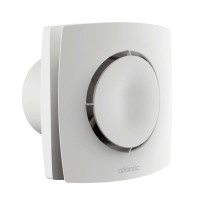
For apartments or small dwellings, intelligent individual extractors can be installed in wet rooms. These self-contained units integrate sensors, motor and on-board intelligence in a single wall-mounted box. Each extractor operates independently, adapting to the air quality in its room.The major advantage lies in their ease of installation and affordable cost, around 200 to 400 euros per unit. Two or three extractors are usually enough for a medium-sized apartment. Some recent models even feature mini-heat recovery on the ceramic heat exchanger.Hybrid systems with free-cooling
The most advanced solutions combine intelligent ventilation and natural cooling strategies. In summer, the system automatically opens additional air inlets during the night to create intensive through-ventilation, evacuating accumulated heat. Indoor and outdoor temperature sensors determine the optimum times for over-ventilation.This approach can reduce air-conditioning requirements by 40 to 60% in temperate regions, with a moderate additional investment of 800 to 1500 euros compared with a conventional double-flow CMV.Installation and integration into your home
The success of an intelligent ventilation project depends on careful design and installation.Preliminary study
An initial energy audit is recommended to correctly size the system. A professional assesses the volume to be ventilated, the number of occupants, specific sources of pollution, the tightness of the building envelope and existing insulation. These parameters determine the flow rates required and the optimum system type.Airtightness deserves special attention. A building that is too permeable generates parasitic infiltrations that disrupt ventilation and reduce its efficiency. A blower door test can reveal these defects before the ventilation system is installed.Equipment positioning
The location of extract and supply units follows precise rules. Extractions are positioned in damp rooms (kitchen, bathroom, WC, laundry room) at the top to capture humidity and pollutants that rise naturally. Fresh air is blown into the main rooms (living room, bedrooms, study), ideally at the bottom to avoid draughts on the occupants.The central air handling unit requires a technical location that is accessible for maintenance, protected from frost and, if possible, in the center of the home to balance out duct lengths. Typical locations include a utility room, a corridor cupboard or the attic.Aesthetic integration
Manufacturers now offer designer vents that blend harmoniously into any interior style. Some are customizable in color, while others adopt discreet, almost invisible shapes. For exposed ducts in renovations, elegant formwork solutions or ceiling-mounted technical ducts help preserve the aesthetic appeal.Commissioning and parameterization
After the physical installation, a fine-tuning phase is essential. The system must be calibrated according to your lifestyle, comfort preferences and the specific characteristics of your home. In the first few days, the system learns and fine-tunes its parameters. It is normal that operation is not immediately optimal.Connecting to your home network and configuring the mobile app gives you access to the dashboard. Here you can define customized scenarios: absence mode, night mode, reception mode, intensive maintenance mode. These scenarios are then automatically activated according to your schedule or in response to your actions.Maintenance and durability
A well-maintained intelligent ventilation system retains its performance for at least 15 to 20 years.Regular maintenance
Filters are the main focus of attention. Double-flow systems generally have two sets of filters: one for incoming fresh air and one for extracted air. They must be replaced every 6 to 12 months, depending on outdoor pollution, to maintain energy efficiency and air quality. Clogged filters increase air resistance, forcing the engine to work harder and consume more fuel.The heat exchanger requires annual cleaning to remove dust that reduces heat recovery efficiency. Depending on the model, cleaning can be carried out using a vacuum cleaner, water or by disassembling the exchanger. Extractors and blowers should be dusted every 3 to 6 months with a microfiber cloth.Preventive maintenance
Every 2 to 3 years, a professional inspection checks that motors are working properly, ductwork is watertight, sensors are calibrated and flow rates are balanced. This preventive control detects anomalies before they degenerate into costly breakdowns.Connected systems make maintenance much easier. The mobile app displays alerts when filters need changing, based on the number of operating hours and the degree of clogging measured. Some systems automatically send a health report to your installer, who can take preventive action.Durability and scalability
The modular design of modern systems enables future upgrades. If you are extending your home, additional vents can usually be added. Software updates, often deployed automatically via the Internet, continually improve optimization algorithms and add new features.This scalability represents a long-term investment that adapts to changing needs and technologies. A system installed today will still be performing and up to date a decade from now, unlike traditional equipment that quickly becomes obsolete.Financial aid and return on investment
Investing in intelligent ventilation benefits from a number of financial aid schemes that significantly reduce the initial cost.MaPrimeRénov'
The government's MaPrimeRénov' scheme provides partial financing for the installation of double-flow CMVs, with amounts varying according to your income. Low-income households can get up to 4,000 euros in assistance for a double-flow VMC, while middle-income households receive around 3,000 euros. Even households with higher incomes benefit from 2,000 euros in assistance.These grants are conditional on the work being carried out by an RGE-certified professional (Reconnu Garant de l'Environnement), and are part of a comprehensive renovation program aimed at significantly improving the home's energy performance.Energy Savings Certificates (CEE)
CEE is another financing tool that can be combined with MaPrimeRénov'. Energy suppliers offer incentives for the installation of efficient systems, generally between 500 and 1,500 euros depending on the type of equipment and location. These bonuses are often easier to obtain than public grants.Reduced VAT and eco-PTZ
The installation of an efficient ventilation system in a home over two years old benefits from a reduced VAT rate of 5.5% instead of 20%, applicable to both equipment and labor. The zero-rate eco-loan allows you to borrow up to 30,000 euros interest-free to finance your energy renovation work, including ventilation.Calculating return on investment
Let's take a 120m² detached house as an example. Total cost of installing an intelligent double-flow CMV: 6,500 euros. After deduction of subsidies (MaPrimeRénov' 3000 euros + CEE 1000 euros): remaining outlay 2500 euros. Annual energy bill savings: 550 euros. Return on investment: 4.5 years.This calculation does not take into account the foreseeable rise in energy prices over the coming years, which will shorten this timeframe even further. What's more, the added value you bring to your property significantly improves its DPE (Diagnostic de Performance Énergétique) energy rating, a major advantage in the event of resale.Conclusion
Intelligent ventilation is an essential solution for significantly reducing your energy consumption, while improving your comfort and the quality of the air you breathe every day. By automatically adapting its operation to your actual needs, it eliminates the energy wastage inherent in traditional systems.Savings of up to several hundred euros a year, coupled with generous financial aid schemes, make this a particularly attractive investment, with paybacks often under 5 years. Beyond the financial aspect, the benefits to your health and well-being are priceless.Faced with the climate emergency and the need to reduce our carbon footprint, every gesture counts. Intelligent ventilation is a concrete and effective way of contributing to the energy transition, while preserving your purchasing power. Whether you're building a new home or renovating an existing one, this mature and proven technology deserves your attention to transform your home into a healthy, comfortable and energy-efficient space.Don't wait any longer to upgrade your ventilation system: your comfort, your health and your wallet will thank you for a long time to come.
Product categories
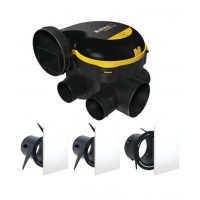
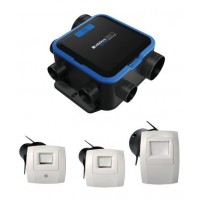
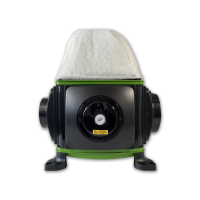
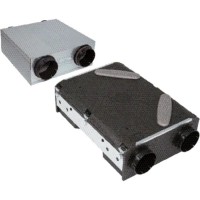
The domeashop store offers product categories related to this item to provide you with more information about the product(s) you are looking for. Don't hesitate to contact us for advice from our specialists.
Frequently asked questions
The domeashop store offers you a list of questions and answers corresponding to the most frequently asked questions related to the theme and products discussed in this article. If you can't find the answer you're looking for, contact us and our specialists will be happy to help.
Conventional CMV operates at a constant flow rate or manual setting, without taking account of actual air renewal requirements. Intelligent ventilation integrates sensors that measure air quality (CO2, humidity, VOCs) in real time and automatically adapts its flow rate. This avoids unnecessary over-ventilation that wastes energy, while ensuring healthy air when needed. Energy savings can be as much as 40% compared with conventional CMV.
Costs vary according to the type of system chosen. For an intelligent double-flow VMC in a single-family home, expect to pay between 4,000 and 8,000 euros, including installation. A connected humidity-sensitive single-flow CMV costs between €1,500 and €3,000. Intelligent decentralized extractors start at 200-400 euros per unit. These amounts can be reduced by 30-60% thanks to subsidies such as MaPrimeRénov' and CEE, bringing the real investment down to very affordable levels.
Absolutely. Several solutions are available for renovations. Connected humidity-sensitive single-flow CMVs can often replace an existing CMV directly, without any major work. Intelligent decentralized extractors can be installed room by room, without the need for ductwork. Although the installation of a double-flow VMC is more complex, it is still possible to run the ducts in the attic, false ceiling or along the walls with formwork. An RGE professional will be able to offer you the solution best suited to your configuration.
Modern systems are designed to operate silently. A quality intelligent dual-flow CMV generates between 25 and 35 dB in normal operation, less than a whispered conversation. The motors use low-noise DC technology, and acoustic ducts further reduce noise pollution. By automatically modulating the flow rate, the system often operates at reduced power, and therefore even more quietly, especially at night when it's very quiet.
Maintenance is simple and straightforward. Filters should be replaced every 6 to 12 months, an operation you can perform yourself in just a few minutes. We recommend dusting the vents every 3 to 6 months. For double-flow CMV, the heat exchanger must be cleaned annually. A professional maintenance visit every 2 to 3 years checks that all functions are working properly. The mobile app automatically alerts you when maintenance is required.
It uses several types of sophisticated sensors positioned in different rooms. CO2 sensors measure the concentration of carbon dioxide, which increases with human presence. Humidity sensors detect water vapor emitted by domestic activities (showers, cooking, drying laundry). VOC (Volatile Organic Compounds) sensors identify chemical pollutants emitted by materials, household products or kitchen activities. Some advanced systems also incorporate fine particle sensors. All this data is analyzed in real time by the system's intelligence.
Yes, basic operation does not require Internet. Sensors, control unit and motors operate in complete autonomy. The Internet connection provides additional functionalities such as remote control via smartphone, data history consultation, software updates and integration with other home automation equipment. In the event of an Internet failure, your system continues to operate normally according to its programming and local sensors.
Yes, the vast majority of modern systems offer a dedicated mobile app for iOS and Android. You can consult the air quality in each room in real time, view your energy consumption, modify settings, manually activate specific modes (boost, absence, night), program time slots and receive maintenance alerts. Some applications integrate with voice assistants (Alexa, Google Home) for voice control. This connectivity offers ease of use and total transparency of your system's operation.
Savings vary according to your initial situation and the type of system installed. By replacing a conventional single-flow CMV with an intelligent dual-flow CMV, savings typically reach 400 to 800 euros a year for a 120m² house. For an apartment switching from a self-regulating to a connected humidity-sensitive CMV, you can expect annual savings of between 150 and 300 euros. These figures represent a 30-50% reduction in ventilation-related energy consumption. With energy prices continuing to rise, these savings will continue to grow in the years ahead.
Yes, in a significant and measurable way. By adapting the ventilation rate to actual needs, the system automatically keeps pollutants below recommended thresholds. Studies show a 30% reduction in allergic symptoms and a 25% reduction in respiratory problems among occupants of equipped homes. CO2 levels remain systematically below 1000 ppm, the threshold above which fatigue and headaches occur. Humidity is regulated between 40 and 60%, the optimum zone for comfort and mold prevention. For sensitive or asthmatic people, the improvement in well-being is often spectacular.