
- There are no more items in your cart
- Shipping
- Total €0.00
Painting lighting: A complete guide to enhancing your works of art

Lighting a painting is not just a question of aesthetics. It's a fundamental element that can completely transform the perception of a work of art and the mood of a room. Whether you're a passionate collector, an art lover or simply the owner of a few precious paintings, understanding the subtleties of picture lighting is essential to showcasing your acquisitions while preserving them. In this comprehensive guide, we explore all aspects of picture lighting, from available technologies and installation techniques, to mistakes to avoid and essential selection criteria.
Contents
- Why is table lighting so important?
- Different types of picture lighting
- Wall sconces for pictures
- Track-mounted spotlights and adjustable spotlights
- Wireless picture lights
- Frame-integrated lighting
- Essential criteria for choosing your picture lighting
- Color temperature
- Color rendering index (CRI)
- Power and light intensity
- Optimum lighting angle
- Installation and positioning: best practices
- Lighting distance and height
- Avoid shadows and uneven lighting
- Managing glare and reflections
- Protection and conservation of works
- The dangers of UV and heat
- Why LEDs are ideal for paintings
- Exposure time and maintenance
- Lighting according to picture type and style
- Oil and acrylic paintings
- Watercolors and works on paper
- Contemporary art and installations
- Common mistakes to avoid
- Lighting too dim or too bright
- Wrong choice of color temperature
- Neglecting CRI and light quality
- Installing light sources too close together
- Budget and customized solutions
- Cost-effective solutions to get you started
- Intermediate range for discerning enthusiasts
- High-end solutions for collectors
- Conclusion
Why is table lighting so important?
Lighting plays a central role in the appreciation of a work of art. A poorly lit painting can lose all its depth, color nuances and visual impact. Conversely, the right lighting reveals subtle details, intensifies colors and creates an atmosphere that enhances the artist's intent.
Beyond the aesthetic aspect, good lighting also protects your artistic investments. UV rays and excessive heat can irreversibly damage paints, causing fading, cracking and pigment deterioration. The right lighting system allows you to admire your paintings while ensuring their long-term preservation.
Lighting also contributes to the overall interior architecture of your space. A well-lit picture becomes a natural focal point that guides the eye and structures the mood of a room. It can transform an empty wall into a personal gallery and bring a touch of sophistication to any interior.
Different types of picture lighting
Wall sconces for pictures
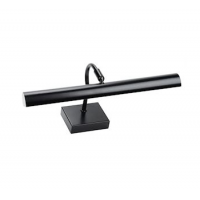
Wall sconces remain the classic, elegant solution for illuminating a painting. Mounted directly above or sometimes on the sides of the frame, they provide precise directional lighting. Traditional designs in brass or bronze lend a timeless charm, particularly suited to classic interiors and old works of art.
Modern sconces now incorporate LED technology, offering more energy-efficient, less heat-generating lighting. Some models feature adjustable arms to direct the light precisely according to the size and position of the picture. The main advantage of sconces remains their ability to create dramatic, professional lighting, similar to that found in art galleries.
Track-mounted spotlights and adjustable spotlights
Track systems with adjustable spotlights offer maximum flexibility for illuminating several pictures, or for adapting the lighting to suit your needs. Installed on the ceiling, these rails allow you to position the spotlights exactly where you want them, and reorient them easily.
This solution is particularly suitable for spaces where you exhibit several works of art, or if you like to reorganize your decor frequently. Adjustable LED spotlights let you adjust the lighting angle to minimize glare and optimize the enhancement of each painting. The modern rails blend discreetly into the décor and can be painted to match the ceiling color for an invisible finish.
Wireless picture lights
The latest innovation in table lighting is wireless, battery-powered solutions. These self-contained lights can be installed in just a few minutes without drilling or pulling cables, making them ideal for tenants or those who prefer to avoid complex installation work.
LED models offer impressive autonomy, running for several weeks on a single charge. Some incorporate ambient light sensors and switch on automatically at dusk. Although less powerful than wired solutions, they are ideally suited to small to medium-sized panels and offer unrivalled mobility.
Frame-integrated lighting
Some top-of-the-range frames integrate LEDs directly into their structure, creating discreet, even lighting around the work. This sophisticated solution eliminates cast shadows and ensures even light distribution across the entire surface of the picture.
Integrated lighting is particularly well suited to contemporary works of art and minimalist interiors, where a streamlined solution is required. The invisible LEDs sometimes create a halo effect, adding an extra dimension to the picture's presentation.
Essential criteria for choosing your picture lighting
Color temperature
Color temperature, measured in Kelvin, has a dramatic influence on the perception of color in a painting. Light that's too warm (2700K-3000K) will give a yellowish tint, while light that's too cold (5000K+) will create a clinical atmosphere and wash out warm hues.
For picture lighting, the ideal range is between 3000K and 4000K, offering a neutral white that faithfully reproduces colors without distorting them. This temperature is close to natural daylight in the middle of the day, allowing the work to be appreciated as the artist intended. Some top-of-the-range systems offer adjustable temperatures to suit different types of work.
Color rendering index (CRI)
CRI measures the ability of a light source to faithfully reproduce colors compared to natural light, on a scale from 0 to 100. For lighting works of art, a CRI greater than 90 is essential, and ideally close to 95 or 100.
A high CRI ensures that chromatic subtleties, delicate nuances and subtle gradations in the picture are perceived with precision. Professional-grade LEDs now achieve CRIs in excess of 95, rivalling natural light in color reproduction.
Power and light intensity
The light intensity required depends on several factors: the size of the painting, the dominant colors, the ambient light level and the distance between the light source and the work. A painting with dark tones will need more light than one with bright, vivid colors.
As a general rule, aim for a lighting level of around 150 to 300 lux over the surface of the picture. Fragile or old works should be lit with less intensity (100-150 lux) to limit the risk of damage. Dimmer systems allow you to adjust the intensity to suit the desired mood and time of day.
Optimum lighting angle
The angle at which the light strikes the painting determines the presence or absence of distracting reflections. The ideal angle is generally 30 degrees to the vertical of the painting. This angle provides uniform illumination of the surface, while directing reflections downwards, out of the viewer's field of vision.
For paintings under glass or gloss varnish, a slightly steeper angle (40-45 degrees) may be necessary. Conversely, matt canvases tolerate more direct lighting. The use of diffusers or special lenses on spotlights also helps to control light distribution and reduce glare.
Installation and positioning: best practices
Lighting distance and height
The distance between the light source and the picture has a direct influence on the quality of the lighting. For wall sconces, a distance of around 15 to 25 cm above the top edge of the frame generally works well for medium-sized pictures. This distance ensures uniform illumination without creating unsightly shadows at the bottom of the picture.
For ceiling spots, the rule of thirds can serve as a guide: if your ceiling is 3 meters high and your picture 1 meter, position the spot about 1 meter from the wall. This proportion ensures optimum light coverage. Don't forget to adjust for the specific size of your work, and test different positions before finally fixing your fixtures.
Avoid shadows and uneven lighting
One of the major challenges of table lighting is to achieve even illumination across the entire surface. Shadows cast by the frame, or spot lighting that is too intense or poorly positioned, can create darker areas that detract from the viewer's appreciation of the work.
For large paintings, consider using several strategically distributed light sources. Two wall lights on each side or several adjustable spotlights provide more uniform coverage. Lighting with diffusers or special optics distributes light more evenly and reduces sharp contrasts.
Managing glare and reflections
Reflections are the number one enemy of good picture lighting. Protective glass, gloss varnishes and even certain paint textures can create annoying reflective zones. The solution starts with the correct positioning of the light source at the optimum angle mentioned above.
Accessories such as honeycombs, side covers and anti-glare optics give you precise control over the light beam. In difficult cases, replacing shiny glass with anti-reflective glass can make all the difference. Always test your installation from different angles to identify and eliminate problematic reflections.
Protection and conservation of works
The dangers of UV and heat
Ultraviolet radiation and excessive heat are the main threats to the conservation of paintings. UV rays progressively fade pigments, especially sensitive organic colors such as reds, yellows and blues. Heat accelerates chemical degradation reactions, can crack varnishes and deform substrates.
Traditional incandescent lamps, while offering excellent color rendering, generate a lot of heat and UV. Halogens, although more efficient, have the same drawbacks to a slightly lesser degree. This is why LED technology has established itself as the benchmark solution for museum and home art lighting.
Why LEDs are ideal for paintings
LEDs offer considerable advantages for lighting works of art. They emit virtually no UV radiation and generate very little heat compared with conventional technologies. This feature allows paintings to be illuminated without risk of deterioration, even over long periods.
Beyond conservation, LEDs offer an exceptional lifespan (often 30,000 to 50,000 hours), minimal energy consumption and a quality of light now equal to or better than traditional sources. Top-of-the-range models achieve CRIs of over 95, and offer dimming options to adapt light intensity as required.
Exposure time and maintenance
Even with optimal LED lighting, it is advisable to limit the exposure time of particularly fragile or precious works. For antique paintings, watercolors or works on paper, consider using occupancy sensors or timers that activate the lighting only when someone is in the room.
Regular maintenance of your lighting systems guarantees their efficiency over time. Periodically clean diffusers and reflectors to maintain light intensity. Check that the LEDs do not dim over time, and replace them if necessary. Gentle dusting of illuminated pictures also optimizes their appearance.
Lighting according to picture type and style
Oil and acrylic paintings
Oil and acrylic paintings, with their often textured surfaces and varied varnishes, benefit from slightly angled lighting that enhances relief and brushstrokes. Too much frontal lighting flattens these works and makes them lose their tactile dimension.
For these paintings, choose light sources with good color rendering and positioned to create soft, cast shadows that emphasize the texture. Works with dark colors or subtle glazes require more intense lighting to reveal their nuances.
Watercolors and works on paper
Watercolors and works on paper are among the most fragile and sensitive to light. Their delicate substrate and often organic pigments require minimal lighting, ideally less than 150 lux. These works are usually framed under glass, which complicates lighting by adding a reflective surface.
For these delicate parts, use UV-free LEDs with a high CRI. Consider installing museum-grade anti-reflective glass, which also filters out some of the residual UV rays. Limit the duration of lighting and avoid exposure to direct natural light, which can be devastating in the long term.
Contemporary art and installations
Contemporary art presents particular lighting challenges. Metal surfaces, mixed materials and three-dimensional installations call for creative approaches. Some contemporary works integrate their own lighting as an integral part of the creation.
For these rooms, lighting often needs to be customized. Rail-mounted systems with adjustable spotlights provide the necessary flexibility. Don't be afraid to experiment with different angles and intensities to find the optimum enhancement. Some conceptual works benefit from unconventional lighting, in contrast to traditional rules.
Common mistakes to avoid
Lighting too dim or too bright
One of the most common mistakes is to underestimate or overestimate lighting requirements. Insufficient lighting leaves the painting in darkness, invisible and without impact. Conversely, over-lighting creates an unpleasant overexposure effect, washes out the colors and can even damage the work.
The solution lies in the use of dimmer systems that allow fine adjustment of intensity. Test different lighting levels at different times of the day to find the ideal balance that enhances the painting without overpowering it. Take photos of your installation to objectively assess the result.
Wrong choice of color temperature
It's a common mistake to install a light source that's too warm, resulting in a yellowish tint, or too cold, creating a clinical atmosphere. This mismatch distorts color perception and betrays the artist's intention.
Always opt for a neutral temperature between 3000K and 4000K for paintings. If you're lighting several works in the same room, make sure all light sources have the same color temperature to avoid variations in color rendering.
Neglecting CRI and light quality
Opting for cheap LEDs with a CRI below 80 is a false economy. These light sources distort colors, turning a bright red into a dull orange or a deep blue into a faded blue-gray. The work loses all its visual power and aesthetic value.
Invest in professional-quality LEDs with a CRI greater than 90. The price difference is minimal compared to the spectacular improvement in rendering. For serious collectors, light sources with CRI above 95 are the standard to aim for.
Installing light sources too close together
Placing lighting too close to the picture creates a number of problems: uneven illumination with some areas very bright and others in shadow, potentially damaging heat build-up, and unsightly shadows created by the relief of the frame.
Observe the recommended distances, and don't hesitate to move your light source back slightly if you notice these defects. For wall sconces, check that the arm is long enough to project light over the entire picture.
Budget and customized solutions
Cost-effective solutions to get you started
For those starting out in picture lighting on a limited budget, there are several affordable options. Simple LED wall lights start at around 30 to 60 euros, and already offer a satisfactory result for small to medium-sized pictures. Choose models with high-quality integrated LEDs rather than versions that accept standard bulbs.
Clip-on spotlights or adjustable floor lamps are also affordable alternatives for testing different configurations before committing to a permanent installation. These temporary solutions allow you to learn and understand your real needs before investing in a permanent system.
Intermediate range for discerning enthusiasts
In the range of 100 to 300 euros per luminaire, you'll find better-quality sconces with high-performance LEDs, high CRI and features like dimming or adjustable arms. These products offer an excellent compromise between performance and price for most collectors.
Rail-mounted systems with two or three adjustable spotlights also fall into this category, offering considerable flexibility. At this price level, look for long warranties (3 to 5 years) that testify to the quality of the workmanship.
High-end solutions for collectors
For serious collectors or works of great value, investing in top-of-the-range lighting (300 to 1000 euros or more per installation) is fully justified. These professional systems offer total control over all parameters: adjustable color temperature, CRI over 95, interchangeable optics, precise dimming and high-quality materials.
Some manufacturers specializing in museum lighting offer customized solutions based on a preliminary study of your works of art and your space. These services sometimes include the programming of personalized lighting scenes and integration into sophisticated home automation systems.
Conclusion
Painting lighting is much more than just a decorative detail: it's an essential element that determines the way we perceive and appreciate works of art in our everyday lives. Well-designed lighting reveals the beauty of paintings, preserves their integrity and transforms the atmosphere of a space.
Today's technologies, especially high-quality LEDs, offer extraordinary possibilities for enhancing your collections while ensuring their long-term preservation. Whether you opt for traditional wallwashers, flexible track systems or innovative wireless solutions, the most important thing is to respect the fundamental principles of neutral color temperature, high CRI, appropriate intensity and optimal positioning.
Feel free to experiment, test different configurations and adjust your installations. The ideal lighting varies according to each work, each space and your personal preferences. With the knowledge acquired in this guide, you now have all the tools you need to create your own home gallery, where each painting radiates its full splendor.

Product categories
The domeashop store offers product categories related to this item to provide you with more information about the product(s) you are looking for. Don't hesitate to contact us for advice from our specialists.
Frequently asked questions
The domeashop store offers you a list of questions and answers corresponding to the most frequently asked questions related to the theme and products discussed in this article. If you can't find the answer you're looking for, contact us and our specialists will be happy to help.
The ideal color temperature is between 3000K and 4000K, corresponding to a neutral white. This range faithfully reproduces colors without distorting them, unlike temperatures that are too warm (yellowish) or too cold (bluish). For works in warm tones, opt for 3000-3500K, while contemporary works in cool colors support 3500-4000K. The key is to avoid extremes, and to favor light that is close to natural daylight in the middle of the day.
Quality LEDs are precisely the safest solution for illuminating paintings. Unlike incandescent or halogen bulbs, they emit virtually no UV radiation and very little heat, the two main factors in the deterioration of works of art. But be sure to choose LEDs specifically designed for art lighting, with high CRI and no residual UV. For particularly fragile works such as watercolors, limit the length of time they are exposed to light.
For a standard-sized picture, place the sconce approximately 15 to 25 cm above the top edge of the frame. This distance allows even illumination of the entire surface without creating unsightly shadows at the bottom of the picture. For larger formats, increase this distance proportionally. The important thing is that the light covers the entire work evenly. Also check that the sconce arm projects light sufficiently forward to avoid shadows.
To minimize glare on a glass picture, use a lighting angle of between 30 and 45 degrees to the picture's vertical axis. This angle directs reflections downwards, out of the usual field of vision. Avoid direct frontal lighting. You can also invest in museum-grade anti-reflective glass, which eliminates up to 99% of reflections while protecting the artwork from UV rays. Finally, position your glass panels away from windows and other sources of direct light.
The recommended intensity varies between 150 and 300 lux over the surface of the board for optimum illumination. Works with dark tones require higher levels (250-300 lux) to reveal their nuances, while light or fragile paintings need only 150-200 lux. For particularly sensitive watercolors and works on paper, stay below 150 lux. Use a luxmeter (or smartphone app) to measure illuminance precisely, and opt for dimmable systems to fine-tune intensity.
No, it's neither necessary nor advisable to light your pictures all the time. Even with UV-free LEDs, continuous exposure to light accelerates the ageing process, particularly in the case of old or fragile pieces. Install easily accessible switches or, even better, presence detectors that activate the lighting only when someone enters the room. For serious collectors, program limited lighting times via a home automation system. This approach protects your investments while allowing you to profit from them.
Indirect natural light can complement artificial lighting, but should never be the main source, let alone a direct one. The sun contains powerful UV rays that rapidly fade pigments and accelerate the ageing of substrates. If a picture receives natural light, make sure it's diffused and indirect, and install UV-filtering blinds or curtains. For valuable works of art, always opt for controlled LED artificial lighting, which offers consistency, safety and total absence of UV.
CRI (Color Rendering Index) measures the ability of a light source to faithfully reproduce colors in relation to natural light, on a scale from 0 to 100. For lighting works of art, a CRI of at least 90 is essential, ideally 95 or more. A low CRI distorts colors: a red may appear orange, a blue may turn gray. Inexpensive LEDs often have a CRI of 70-80, which is insufficient for paintings. Invest in professional-quality LEDs with CRI > 90 to preserve the chromatic integrity of your artwork.
The budget varies considerably according to your needs and requirements. For a satisfactory entry-level solution, expect to pay between 30 and 80 euros for a basic LED wall light suitable for small pictures. The mid-range (100-300 euros) offers excellent value for money, with high CRI, dimming and meticulous finishes. For demanding collectors or works of great value, professional systems start at 300-500 euros and can exceed 1000 euros for customized installations with special optics and advanced controls. Think of this investment as protection for your work.
Yes, there are many solutions available to even novice DIY enthusiasts. Battery-powered, cordless wall lights can be installed in just a few minutes, with no wiring required. Wired wall sconces require basic DIY skills: drilling, fixing and electrical connection (always switch off the power before working on them). For ceiling-mounted rail-mounted systems or complex installations with dimming and programming, calling in a professional electrician guarantees optimum results that comply with safety standards. Don't hesitate to ask for advice in store to choose the solution best suited to your skills.