
- There are no more items in your cart
- Shipping
- Total €0.00
What is a branch circuit breaker?

The circuit-breaker is an essential part of any electrical installation, yet it's little-known to the general public. Located at the interface between the electricity distribution network and your domestic installation, this protective device plays an important role in your safety and that of your home. In this comprehensive guide, we'll explore in detail what a branch circuit breaker is, how it works, its technical features and everything you need to know to understand this indispensable piece of equipment.
Contents
- Definition and role of the service circuit breaker
- What exactly is a branch circuit breaker?
- The three main functions of the service circuit breaker
- Location and composition of the service circuit breaker
- Where is the branch circuit breaker located?
- Components of a branch circuit breaker
- Technical operation of the service circuit breaker
- The operating principle
- The trigger curve
- The different types of circuit breaker
- Size classification
- Classification by number of phases
- Selective branch circuit breakers
- Branch differential circuit breakers
- Technical specifications to know
- Switching power
- Rated voltage
- The limitation class
- Mechanical and electrical endurance
- Installation and regulations
- Who can install a branch circuit breaker?
- Applicable standards
- Connecting to the electrical panel
- Maintenance and repair
- Preventive maintenance operations
- Understanding nuisance triggers
- When should I contact the network operator?
- Branch circuit breaker vs. other protective devices
- Difference from divisional circuit breaker
- Difference with the differential switch
- Difference from electric meter
- How do I choose my branch circuit breaker?
- Depending on contract power
- Depending on the type of installation
- Additional options
- Technological evolution of service entrance circuit breakers
- Communicating circuit breakers
- Electronic circuit breakers
- Home automation integration
- Economics and sustainability
- Cost and lifetime
- Environmental impact
- Practical tips to optimize use
- Avoid frequent tripping
- Managing a power increase
- Awareness-raising and training
- Conclusion
Definition and role of the service circuit breaker
What exactly is a branch circuit breaker?
The service circuit breaker, also known as the subscriber circuit breaker or EDF circuit breaker, is a protection and disconnection device installed at the head of your electrical installation. It is the point of separation between the public electricity distribution network and your private installation. This device generally belongs to the network operator (Enedis in France) and is an integral part of the electricity meter.
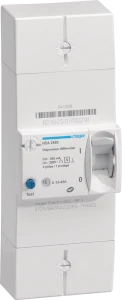
Contrary to popular belief, circuit breakers don't just cut off the power in the event of a problem. It performs several vital functions that guarantee the safety of your electrical installation and the protection of people.
The three main functions of the service circuit breaker
1. The overcurrent protection function.
The circuit breaker protects your installation against overloads and short circuits. When the current exceeds the calibrated threshold (generally between 15A and 90A, depending on your subscription), the circuit breaker automatically trips and cuts off the power supply. This protection prevents cables from overheating and causing a fire.
2. The general cut-off function.
The branch circuit breaker cuts off the power supply to your entire home simply by operating its lever. This function is essential when working on the electrical installation, in an emergency, or when you're away for a long time. It's the only device that lets you switch off your entire installation from a single point.
3. The power limit function.
The connection circuit-breaker regulates the maximum power you can draw from the grid according to your contract. If you exceed the contracted power by using too many appliances simultaneously, the circuit breaker trips. This function protects the distribution network and ensures that you comply with the terms of your contract with your electricity supplier.
Location and composition of the service circuit breaker
Where is the branch circuit breaker located?
The connection circuit-breaker is systematically installed in the technical housing duct (GTL) or in the control panel, just after the electricity meter. It is the first protective element you encounter on your installation. In older homes, it may be located in a wall-mounted electrical cabinet, while in newer buildings, it is integrated into a complete box containing meter and protection.
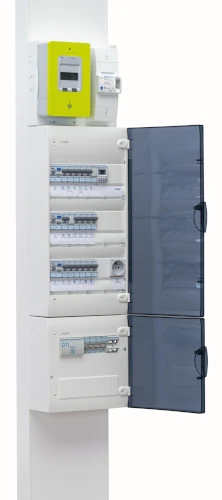
The location of the circuit breaker is governed by standard NF C 14-100, which stipulates that it must be easily accessible, located between 0.90 m and 1.80 m above the ground, and protected from the weather if installed outdoors.
Components of a branch circuit breaker
A branch circuit breaker consists of several technical components:
The housing: usually made of shock- and flame-resistant insulating material, it protects internal components and ensures user safety.
The tripping mechanism: this comprises a thermal release (bimetallic strip) which reacts to prolonged overloads, and a magnetic release (coil) which intervenes rapidly in the event of a short-circuit.
Contacts: these are conductive elements that open or close to establish or interrupt current flow. They are sized to withstand the current rating of the circuit-breaker.
The control lever: located on the front panel, it allows manual operation of the circuit-breaker and visually indicates its status (open or closed).
Connection terminals: for connecting incoming (network) and outgoing (installation) cables.
Technical operation of the service circuit breaker
The operating principle
The circuit breaker operates on the principle of detecting electrical anomalies. It constantly monitors the current flowing through it. As long as this current remains within the normal limits defined by the circuit-breaker rating, the device remains closed and allows the current to flow.
When an anomaly is detected, two types of triggers can intervene depending on the nature of the problem:
The thermal trip: This uses a bimetallic strip (two metals joined together with different coefficients of expansion) which deforms under the effect of the heat produced by an overcurrent. When the deformation reaches a critical threshold, it activates the trigger mechanism. This system reacts with a certain delay, which is normal for a progressive overload.
The magnetic trip unit: This uses an electromagnetic coil to create a magnetic field proportional to the current intensity. In the event of a short-circuit (very high current), the magnetic field becomes strong enough to attract a metal core, which instantly opens the contacts. This triggering is virtually instantaneous (a few milliseconds).
The trigger curve
Branch circuit breakers follow standardized tripping curves that define their response time as a function of current intensity. The most common curve for domestic circuit breakers is curve C, which offers a good compromise between tolerance to appliance start-up currents and rapid intervention in the event of a fault.
A typical trigger curve shows that :
- For a 13% overload (1.13 times rated current), the circuit-breaker can remain closed indefinitely.
- At 45% overload (1.45 times rated current), tripping occurs in less than an hour.
- In the event of a short-circuit (5 to 10 times the rated current), tripping is instantaneous.
The different types of circuit breaker
Size classification
The rating of a branch circuit breaker corresponds to the maximum current it can permanently withstand. This rating is determined by the power you subscribe to with your electricity supplier.
Circuit breaker 15/45A (single-phase) : suitable for small installations with a subscribed power of 3 to 9 kVA. It can be found in studios, small apartments or second homes.
30/60A circuit breaker (single-phase): the most common in homes, it corresponds to a power rating of 6 to 12 kVA, i.e. the majority of single-family homes and apartments.
60/90A circuit breaker (three-phase or single-phase) : for larger installations requiring 12 to 18 kVA, such as large houses, homes with electric heating or business premises.
Circuit breaker over 90A: reserved for industrial installations or very large homes with high energy requirements.
Classification by number of phases
Single-phase circuit breaker: protects a 230V installation with two active conductors (phase and neutral). This is the most common type in recent homes. Maximum single-phase power is generally limited to 18 kVA.
Three-phase circuit breaker: protects a 400V installation with four conductors (three phases and one neutral). This type of installation was common in older buildings and is still used when the power required exceeds 18 kVA or to supply specific three-phase appliances.
Selective branch circuit breakers
Selective branch circuit breakers (type S) are designed to provide better coordination with protection devices downstream of the installation. They have a deliberately delayed tripping time, enabling the divisional circuit-breakers to react first in the event of a localized fault. This selectivity avoids a general shutdown of the installation when only one circuit is faulty, thus improving user comfort.
Branch differential circuit breakers
Some circuit-breakers incorporate 500 mA residual current protection. Although less sensitive than the 30 mA differential switches on the electrical panel, this function provides initial protection against major insulation faults. These models are particularly recommended for older installations which do not always have full downstream residual current protection.
Technical specifications to know
Switching power
The breaking capacity (Icn or Icu) represents the maximum short-circuit current that the circuit-breaker can interrupt without being destroyed. This value, expressed in kilo-amperes (kA), is crucial to safety. Household circuit breakers generally have a breaking capacity of 6 to 15 kA, which is more than sufficient for domestic installations.
Rated voltage
The rated voltage corresponds to the nominal voltage for which the circuit-breaker is designed. In France, single-phase circuit breakers are designed for 230V and three-phase for 400V. This characteristic must correspond to the type of power supply for your installation.
The limitation class
Some circuit-breakers have a limiting class (class 1, 2 or 3) which indicates their ability to limit the energy allowed through in the event of a short-circuit. A limiting circuit-breaker (class 3) provides better protection for downstream equipment by reducing electrodynamic and thermal stresses during faults.
Mechanical and electrical endurance
Mechanical endurance represents the number of operations (opening/closing) the circuit-breaker can perform without an electrical load. Electrical endurance, which is more restrictive, indicates the number of maneuvers possible at rated load. A quality circuit breaker can withstand between 10,000 and 20,000 electrical operations.
Installation and regulations
Who can install a branch circuit breaker?
Installation and replacement of branch circuit breakers are strictly regulated. In France, only the network operator (Enedis or a local authority) or a professional authorized by them is authorized to work on this equipment. The circuit breaker is part of the public domain and remains the property of the network operator.
Unauthorized tampering with the circuit breaker is not only dangerous, it's illegal. It can lead to financial penalties, termination of the electricity supply contract, or even legal action in the event of an accident.
Applicable standards
The installation of the service circuit breaker is governed by several standards:
Norm NF C 14-100: defines low-voltage connection installations between the public distribution network and domestic installations. It specifies the circuit-breaker's technical characteristics, its location and installation conditions.
Standard NF C 15-100: although primarily concerned with indoor installation, it defines the interface with the branch circuit breaker and imposes certain coordination requirements.
NF EN 60898-1: defines the technical characteristics of domestic circuit breakers for overcurrent protection.
Connecting to the electrical panel
The branch circuit breaker is connected to the main switchboard by cables sized according to the subscribed power. These cables, generally made of copper, must comply with minimum cross-sections :
- 10 mm² for ratings up to 45A (single-phase)
- 16 mm² for 60A rating (single-phase)
- 25 mm² for 90A rating (single-phase)
Cable routing must be careful, mechanically protected, and as short as possible to limit line losses and fault risks.
Maintenance and repair
Preventive maintenance operations
Although it is the property of the network operator, certain simple operations can extend the life of your circuit breaker:
Monthly function test: operate the circuit breaker lever once a month to check its mobility and prevent the mechanisms from seizing. This simple procedure keeps the contacts in good condition.
Visual monitoring: regularly inspect the external condition of the circuit breaker. Look for signs of overheating (housing discoloration, burning smell), cracks, or any visible damage. In the event of a fault, contact Enedis immediately.
Tightening check: if you are qualified and authorized, check the tightness of the connections annually. Poor contact can cause localized overheating and damage the circuit-breaker.
Cleaning: keep the circuit-breaker environment clean and dry. Dust and humidity can affect its operation and accelerate degradation.
Understanding nuisance triggers
A branch circuit breaker that regularly trips can have several causes:
Installation overload: you are simultaneously using too many electrical appliances for your subscribed power. Solution: reduce simultaneous consumption or increase your subscription.
Insulation fault: a device or circuit has an insulation fault. Solution: disconnect the devices one by one to identify the culprit, then have it repaired or replaced.
Old age of circuit breaker: after 15 to 20 years of service, a circuit breaker can become too sensitive. Solution: contact Enedis for a replacement.
Short-circuit: a clear fault in the system causes immediate tripping. Solution: call in a qualified electrician to locate and repair the short-circuit.
When should I contact the network operator?
You must contact Enedis in the following situations:
- Circuit breaker does not reset after tripping
- You notice burn marks or overheating on the housing
- Circuit breaker lever is stuck or does not stay in the closed position
- You wish to increase the power of your subscription
- Circuit breaker trips for no apparent reason despite normal power consumption
- You notice a leak (water infiltration)
Branch circuit breaker vs. other protective devices
Difference from divisional circuit breaker
The branch circuit breaker is often confused with the divisional circuit breakers on the electrical panel. Although their operating principle is similar, they perform different roles:
Service circuit breaker :
- Protects the entire system
- High ratings (15 to 90A)
- Property of the network operator
- Installation upstream of the electrical panel
- Limits power according to subscription
Divisional circuit breaker :
- Protects a specific circuit (lighting, sockets, etc.).)
- Lower ratings (2 to 32A)
- Customer property
- Electrical panel installation
- Circuit overload and short-circuit protection
Difference with the differential switch
The differential switch and the circuit breaker are complementary but distinct:
Differential switch :
- Protects against current leakage (electrocution)
- 30 mA sensitivity (high sensitivity)
- Does not protect against overloads
- Detects insulation faults
- Mandatory for modern installations
Service circuit breaker :
- Protects against overcurrent
- Can have 500 mA differential sensitivity (optional)
- Global plant protection
- Power limiting
Difference from electric meter
The meter and the circuit breaker are two separate pieces of equipment that are often grouped together in the same box:
Electric meter :
- Measures energy consumption
- Does not protect the system
- Enables billing
- Cannot cut power (except Linky with remote control)
Service circuit breaker :
- Protects the installation
- Enables manual shutdown
- Does not measure consumption
- Limits available power
How do I choose my branch circuit breaker?
Depending on contract power
Your choice of circuit-breaker rating depends directly on your subscribed power. Here is a general correspondence table:
3 kVA: 15A single-phase circuit breaker (small studio)
6 kVA: 30A single-phase circuit breaker (apartment, small house)
9 kVA: 45A single-phase circuit breaker (medium-sized house)
12 kVA : 60A single-phase circuit breaker (large house)
15 kVA: 75A single-phase or three-phase circuit breaker
18 kVA : 90A single-phase or three-phase circuit breaker
Note that it is the network operator who determines and installs the right circuit breaker for your subscription. You cannot freely choose a larger size without modifying your contract.
Depending on the type of installation
Single-phase installation: preferred in modern homes up to 18 kVA. It offers better load distribution and simpler installation.
Three-phase installation: required above 18 kVA or if you have three-phase equipment (heat pump, industrial motors, etc.).). It spreads the load over three phases, but is more complex to manage.
Additional options
Integrated residual current protection: recommended if your installation does not have a complete 30 mA residual current protection system. It offers basic protection against electric shock.
Selectivity: useful in large installations to avoid unnecessary blackouts. A selective circuit-breaker gives the downstream protection devices time to react first.
Position indicator: very practical for checking circuit-breaker status remotely (particularly useful if the circuit-breaker is far away).
Connection terminal blocks: some models offer more accessible terminal blocks for easier connection and servicing.
Technological evolution of service entrance circuit breakers
Communicating circuit breakers
With the arrival of Linky meters, circuit breakers are also changing. The new models can integrate communication functions allowing :
- Remote reset in the event of overload tripping
- Remote monitoring of circuit-breaker status
- Automatic adaptation of available power to dynamic contracts
- Transmission of information on detected faults
These features enhance user comfort and enable more precise management of power consumption.
Electronic circuit breakers
Electronic circuit breakers represent the new generation of protection. Unlike traditional electromechanical circuit breakers, they use electronic sensors and microprocessors to detect anomalies. Their advantages:
- Increased detection accuracy
- Fine-tuned, customizable settings
- Optimized trigger curves
- Integrated fault diagnosis
- Greater durability (fewer mechanical parts)
- Connectivity and remote supervision
Home automation integration
New-generation branch circuit breakers are gradually being integrated into home energy management systems. They can contact :
- Automatic load shedding systems (temporary shutdown of non-priority devices)
- Energy managers who optimize consumption during off-peak hours
- Mobile applications for real-time monitoring
- Energy production systems (solar panels, batteries) for intelligent management
Economics and sustainability
Cost and lifetime
The cost of a branch circuit breaker varies according to its rating and functionality, from around 150 to 500 euros. However, since it's owned by the network operator, you don't usually have to buy it. Replacement in the event of defects or obsolescence is handled by Enedis as part of its network maintenance.
The average service life of a service circuit breaker is 15 to 25 years, depending on operating conditions and environment. Factors influencing longevity :
- Trigger frequency
- Environmental conditions (temperature, humidity)
- Quality of downstream electrical installation
- Stability of the distribution network
- Regular maintenance
Environmental impact
Manufacturers of circuit breakers are increasingly committed to an eco-responsible approach:
Recyclability: modern circuit breakers are designed to be easily dismantled and recycled at the end of their life. Metals (copper, aluminum) are recovered and recycled.
Energy efficiency: the new electronic circuit breakers consume less energy and generate less heat loss than their predecessors.
Durability: improved reliability and service life reduce replacement frequency and therefore overall environmental impact.
Hazardous substances: European standards (RoHS) limit the use of toxic substances in electrical equipment.
Practical tips to optimize use
Avoid frequent tripping
To reduce the inconvenience caused by tripped circuit breakers:
Size your subscription correctly: analyze your actual consumption and adjust your subscribed power accordingly. An undersized subscription will cause frequent power cuts.
Schedule your consumption: avoid running all your energy-hungry appliances (electric heating, water heater, washing machine, oven, etc.) simultaneously.). A simple timeframe can solve many problems.
Use a load shedder: this device automatically cuts off non-priority circuits when consumption approaches the limit, thus avoiding tripping the branch circuit breaker.
Modernize your equipment: replace old, energy-hungry appliances with recent, energy-efficient models. Overall consumption will drop, reducing the risk of overloading.
Managing a power increase
If you find that your circuit breaker regularly trips despite normal use, it may be time to increase your contract power:
Assess your needs: list all your appliances and their wattages, identify periods of high consumption. This will give you an accurate idea of the power required.
Contact your supplier: to change your subscribed power, contact your electricity supplier, who will forward the request to Enedis.
Check your installation: before increasing power, make sure your electrical installation (switchboard, wiring) can handle the extra load. Upgrading may be necessary.
Anticipate the delays: changing power generally requires the intervention of an Enedis technician to adapt or replace the connection circuit breaker. Allow a few days to a few weeks, depending on availability.
Awareness-raising and training
Inform occupants: make sure everyone in the household knows the location of the branch circuit breaker and how to reset it in the event of a trip.
Explain the limits: make it clear why certain combinations of appliances cause outages, to develop good consumption habits.
Prepare for emergencies: keep emergency numbers (Enedis, electrician, fire department) close to the circuit breaker and a flashlight in case of a night-time power cut.
Conclusion
The circuit breaker is much more than a simple switch: it's the silent guardian of your electrical installation. Understanding it is essential for any owner or tenant concerned about the safety and smooth running of their home. From its overcurrent protection function to its power regulation role and its ability to cut off the general power supply, the service circuit breaker plays a vital role in everyday life.
The technological evolution of these devices, with the integration of communicating and electronic functions, opens up new prospects for even smarter, safer management of our electricity consumption. At a time of energy transition and connected homes, the service circuit breaker is adapting to meet the new challenges of the 21st century.
Although maintenance is the responsibility of the network operator, informed use and regular checks on your part will help extend its service life and guarantee optimum protection. Never hesitate to contact Enedis or a qualified professional in case of doubt or anomaly: electrical safety is never an area where you have to improvise.
By mastering the operating principles and best practices for using your circuit breaker, you can ensure optimum electrical comfort and effective protection for your home. Investing time in this understanding means investing in the safety and tranquillity of your daily life.

Product categories
The domeashop store offers product categories related to this item to provide you with more information about the product(s) you are looking for. Don't hesitate to contact us for advice from our specialists.
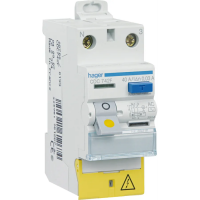
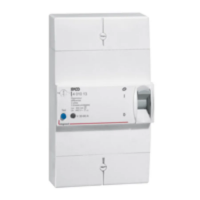
Frequently asked questions
The domeashop store offers you a list of questions and answers corresponding to the most frequently asked questions related to the theme and products discussed in this article. If you can't find the answer you're looking for, contact us and our specialists will be happy to help.
The circuit-breaker mainly protects against overloads and short circuits, and limits power according to your subscription. In addition to these protections, the residual current circuit breaker includes a current leakage detection function (protection against electrocution). The service circuit breaker can sometimes include 500 mA residual current protection, but this is less sensitive than the mandatory 30 mA residual current protection in the electrical panel. The connection circuit-breaker is owned by Enedis and is located at the head of the installation, while the residual-current devices in the switchboard belong to the owner and protect specific circuits.
You can install a branch circuit breaker in a new home (not connected to the electricity network), but then you won't be able to replace it yourself. Only Enedis or a service provider authorized by Enedis is authorized to work on this device. Unauthorized tampering is illegal and dangerous, and may result in financial penalties, cancellation of your electricity contract, and the risk of serious electrocution if you come into contact with live conductors. If you have a problem with your circuit breaker, always contact your electricity supplier or Enedis directly.
Frequent tripping of the service circuit breaker can have several causes. The most common is an overload of the installation: you use too many electrical appliances at the same time, compared to the power you have subscribed to. An insulation fault on a device or circuit can also cause repeated tripping. The age of the circuit-breaker itself can make it too sensitive after 15 to 20 years of service. Finally, a short-circuit in the system causes instantaneous tripping. To identify the cause, start by reducing your consumption at the same time, unplug appliances one by one to detect a possible fault, and if the problem persists, contact an electrician and then possibly Enedis.
There are several signs that a branch circuit breaker may be defective. Unwanted tripping when your consumption is normal is a first indicator. If the circuit-breaker cannot be reset after tripping, or if the lever does not remain in the closed position, this indicates a mechanical problem. Burn marks, discoloration of the casing or a smell of burnt plastic indicate abnormal overheating. A sizzling noise or excessive heating of the terminals may indicate poor contact. Finally, a cracked or damaged casing compromises safety. In all these cases, contact Enedis immediately for assistance, as a faulty circuit-breaker no longer performs its protective function properly.
The size of the connection circuit breaker depends on the power rating of your electricity contract. For a 3 kVA subscription (small studio), a 15A circuit breaker is sufficient. A standard home of 30 to 80 m² generally requires 6 to 9 kVA, or a 30 to 45A circuit breaker. A 100 to 150 m² single-family home usually requires 9 to 12 kVA (45 to 60A circuit breaker). Above 150 m² or with a large electric heating system, you'll need 12 to 18 kVA (60 to 90A circuit breaker). To determine your needs, add up the wattage of all your appliances likely to operate simultaneously, and add a safety margin of 20%. Enedis installs the appropriate circuit breaker when you connect or change your subscription.
It's a good idea to turn off the circuit breaker when you're away for long periods (vacations, business trips). This action completely de-energizes your installation, eliminating the risk of an electrical fire due to a fault, short-circuit or power surge while you're away. It also saves money by eliminating phantom power consumption on standby. However, before you turn off the circuit breaker, think of the consequences: your fridge and freezer will stop working, security systems (alarm, video surveillance) will no longer function, heating will be cut off (risk of freezing in winter), and your appliance settings will be lost. Alternatively, you can unplug only non-essential devices and leave the necessary circuits energized.
The average service life of a branch circuit breaker is 15 to 25 years, depending on operating conditions and environment. This longevity depends on several factors: the frequency of tripping (each operation slightly wears out the contacts), the quality of the downstream installation, environmental conditions such as humidity and temperature, and regular maintenance. A circuit-breaker installed in a dry, temperate environment, on a sound electrical installation, and which only rarely trips, can easily exceed 20 years. Conversely, a circuit-breaker that is frequently used or exposed to harsh conditions may require replacement after 10 to 15 years. Enedis monitors the condition of connection circuit breakers and replaces them as part of its network maintenance.
No, you can't increase the power of your connection circuit breaker without changing your subscription with your electricity supplier. The size of the circuit breaker is directly linked to the power level subscribed to in your contract: the circuit breaker is precisely adjusted to limit the power available according to your contractual terms. If you want more power, you must first contact your supplier to take out a higher subscription. The supplier will then forward the request to Enedis, who will adapt or replace the connection circuit-breaker according to the new subscribed power. This usually comes with a commissioning fee and a higher monthly subscription. Also check that your electrical installation (wiring between circuit breaker and switchboard) can handle the extra power.
If your circuit breaker refuses to reset, there are several steps to take. First, wait a few minutes: after an overload trip, the thermal system needs to cool down. Next, turn off all sub-division circuit breakers on your electrical panel to isolate the installation. Try resetting the branch circuit breaker. If it holds, reset the circuit breakers one by one to identify the faulty circuit. If the circuit-breaker still doesn't hold, the problem is either in the cables between the circuit-breaker and your switchboard, or the circuit-breaker itself is faulty. In this case, never force the issue or attempt any repairs: contact Enedis immediately on 09 72 67 50 XX (the emergency number for your region) for an emergency response. A circuit breaker that refuses to reset indicates a serious fault requiring professional intervention.
The single-phase circuit-breaker protects a 230-volt installation with two active conductors: one phase and one neutral. This is the current standard in modern homes and apartments, generally limited to a maximum of 18 kVA. Three-phase circuit breakers protect a 400-volt installation with four conductors: three phases and a neutral conductor. This type of installation was common in older buildings and is still necessary for power ratings above 18 kVA or to supply specific three-phase equipment (certain heat pumps, industrial motors). Three-phase allows the load to be distributed over three phases, but requires a more complex and costly installation. Today, Enedis favors single-phase for new household connections, with three-phase installed only on justified request or for specific needs.